
In the field of industrial automation, the average design life of a control board is required to exceed 10 years. This means that every component on it must withstand the severe tests of time, temperature variations, vibration, and complex electromagnetic environments.
ECS-F1HE335K, this seemingly ordinary 3.3μF/50V tantalum capacitor, is becoming a "reassurance" for many industrial equipment manufacturers transitioning from prototype verification to mass production due to its excellent long-term stability demonstrated under the resin dipping process. This article will provide an in-depth analysis of its reliability performance in different industrial scenarios to offer solid case support for engineers' selection decisions.
Harsh Environments and Component Challenges of Industrial Control Boards
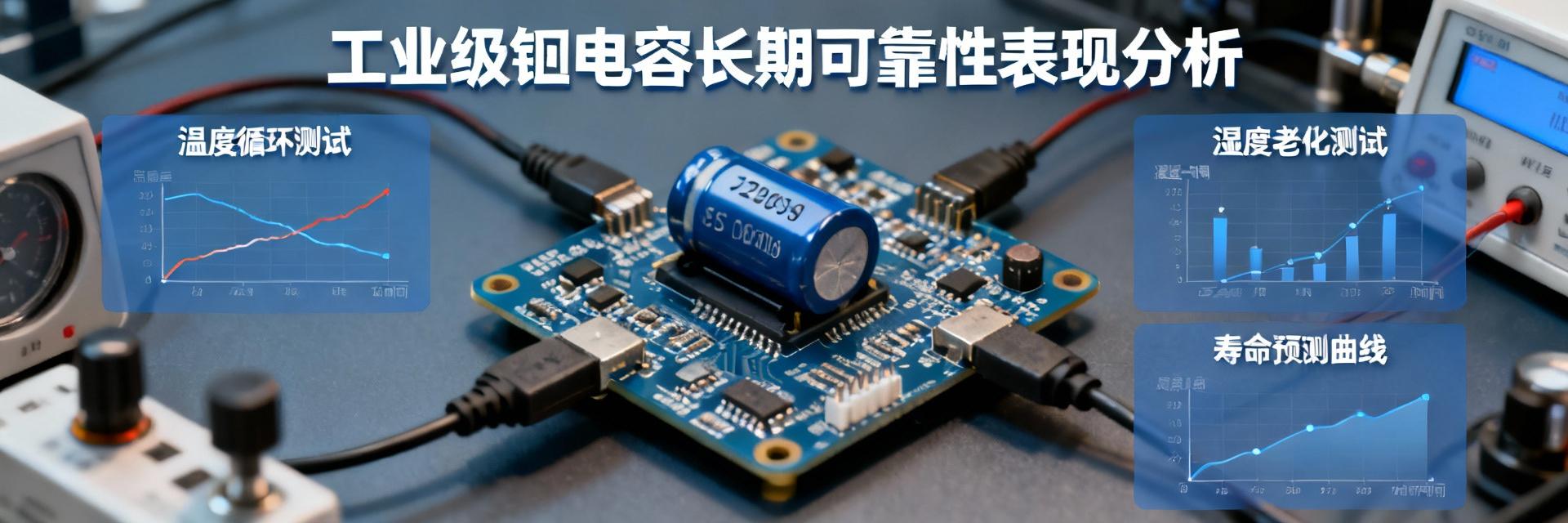
Industrial control boards, serving as the "brain" of automation systems, operate in environments far more demanding than consumer electronics. They are deployed year-round in factory workshops, outdoor cabinets, and other locations, facing continuous temperature cycling, high humidity, mechanical vibration, and electromagnetic interference from motors, frequency converters, and other equipment. These stress factors accelerate the performance degradation of electronic components and can even lead to sudden failure.
Failure Mode Analysis under Long-term Continuous Operation
Primary failure modes include capacitance attenuation, increased Equivalent Series Resistance (ESR), and increased leakage current. In the filtering circuits of switching power supplies, such degradation directly threatens the normal operation of core components like microprocessors and sensors.
Impact of Environmental Stress (Temp, Humidity, Vibration)
According to the Arrhenius model, the lifespan is halved for every 10°C increase in operating temperature. Additionally, humidity erodes packaging, and vibration leads to fatigue of internal structures; industrial-grade components must maintain stability under composite stresses.
ECS-F1HE335K: Analysis of Key Parameters and Reliability Design
The core value of ECS-F1HE335K lies in its design and process reinforcement specifically for high-reliability applications, utilizing the EIA standard 3216-18 package.
Performance Comparison Visualization (Environmental Endurance)
Resin Dipping (EF Type) Process
Resin dipping completely encapsulates the capacitor core in dense epoxy resin, effectively blocking the intrusion of humid air and pollutants, and significantly enhancing moisture resistance and mechanical stress resistance.
-55°C to 105°C Wide Temperature Range
A wide temperature range means the capacitor can maintain sufficient capacity at low temperatures while possessing a longer expected life and lower failure rate at high temperatures.
Reliability Verification Path from Lab to Production Line
Thousands of hours of test data at 105°C and rated voltage strongly support its lifespan prediction of up to ten years at room temperature.
By tracking actual operation data from industrial control boards, an extremely low FIT value is calculated, which is more convincing than laboratory data.
Long-term Stability Performance in Typical Industrial Application Scenarios
| Application Scenario | Key Role | 10-Year Operation Performance |
|---|---|---|
| PLC I/O Module | DC/DC Conversion Output Filtering | Capacitance retention > 90%, minimal ESR growth |
| Motor Drive Board | Surge Protection & Voltage Absorption | Withstands frequent high-frequency pulses, no breakdown |
| Outdoor Monitoring Terminal | Power Management Unit | Responds to day-night temperature changes, no parameter drift |
Key Summary
- Environmental Endurance is Core: ECS-F1HE335K is specially reinforced for stresses such as temperature/humidity changes and vibration in industrial environments through the resin dipping (EF type) process and a wide temperature range of -55°C to 105°C.
- Verification Systems Build Trust: Reliability has been verified through the entire chain from laboratory accelerated life testing to batch application field failure rate statistics, with a record of over 10 years of stable operation.
- Mass Production Application Requires Systemic Consideration: In mass production design, circuit margins should be reasonably planned, and supply chain batch consistency strictly controlled to ensure the market competitiveness of the final product.