
2025 Mainstream Tantalum Capacitor Technology Report: Data Truths of Miniaturization and High Reliability from ECS-F1HE155K
In 2025, with the explosive growth of IoT, smart vehicles, and wearable devices, the "physique" and "endurance" of electronic components are undergoing unprecedented tests. Data shows that the annual growth rate of global demand for miniaturized, high-reliability tantalum capacitors is expected to exceed 18%. What key data drives industry transformation behind advanced models represented by ECS-F1HE155K? This report will reveal real-world scenarios from technical parameters to market applications.
M Market Trends: Why Have Miniaturization and High Reliability Become Core Demands in 2025?
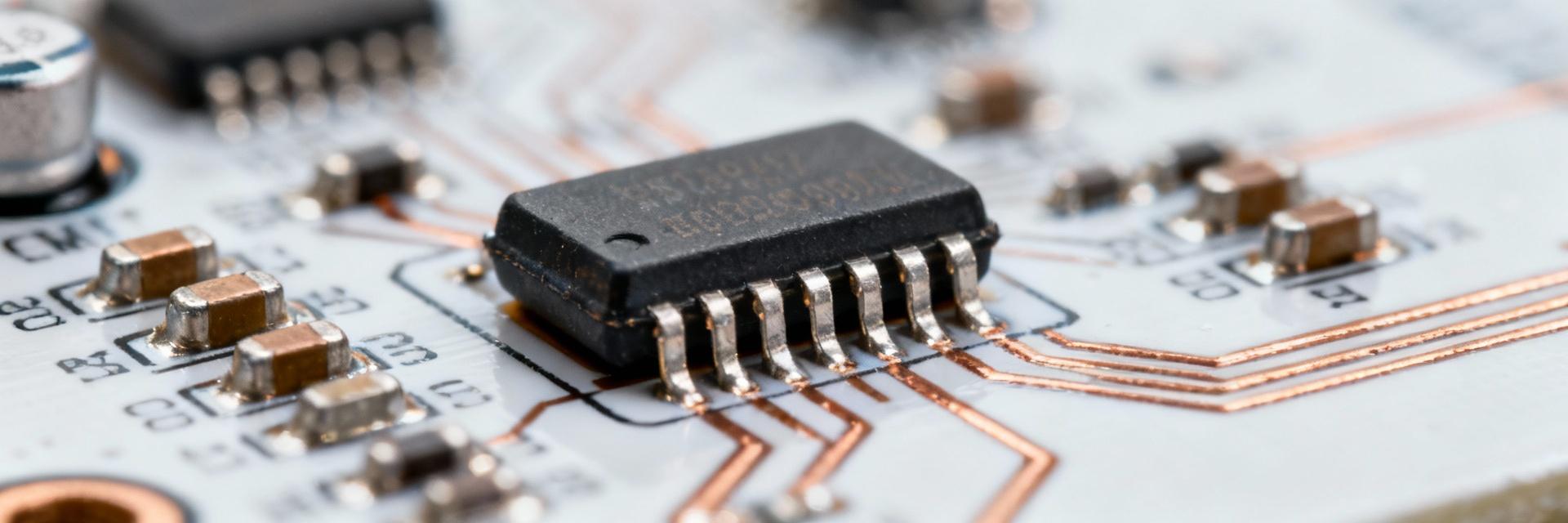
Current electronic device designs face two core contradictions: increasingly complex functions versus limited physical space, and harsh application environments versus extreme requirements for stability. This directly drives the evolution of tantalum capacitor technology toward smaller volumes and greater robustness. For engineers, understanding the data logic behind this trend is the first step in precise selection.
"Slimming Down" Competition of End Devices: An Inevitable Choice Under Space Constraints
Taking True Wireless Stereo (TWS) headphones and smartwatches as examples, their internal circuit board space is "premium real estate." Traditional plug-ins or larger package capacitors can no longer meet design needs. Using micro-chip tantalum capacitors like ECS-F1HE155K can provide significant capacitance values within a tiny board footprint, directly determining whether the product can achieve a thinner, more compact final form. Market feedback shows a strong positive correlation between the iteration speed of consumer electronics and the degree of component miniaturization.
Proliferation of Applications in Harsh Environments: The Reliability Leap from Consumer Electronics to Industrial and Automotive Electronics
Tantalum capacitor applications have gone far beyond mild consumer electronics. In automotive electronics, especially in Advanced Driver Assistance Systems (ADAS) controllers and Engine Control Units (ECUs), components must withstand temperature ranges of -55°C to 125°C or even wider, as well as intense vibration. In industrial and communication base station equipment, maintenance-free stable operation for over ten years is required. High reliability has shifted from a bonus point to a ticket for market entry, with key indicators like failure rates becoming hard assessment standards.
D Data Deconstruction: Technical Evolution of Mainstream Tantalum Capacitors from the Perspective of ECS-F1HE155K
To gain insight into technical trends, one must delve into the parameter details of specific models. Analyzing ECS-F1HE155K as a sample clearly shows the industry's efforts and achievements in balancing multiple performance indicators.
Comparative Analysis of Key Parameters: The Art of Balancing Size, Capacitance, ESR, and Leakage Current
The typical package of ECS-F1HE155K is EIA-3216 (Metric 1206), achieving a nominal capacitance value of 1.5µF within a tiny area of 1.6mm x 3.2mm at a rated voltage of 25V. This combination reflects high volumetric efficiency. Simultaneously, its Equivalent Series Resistance (ESR) and leakage current are controlled at excellent levels. The table below shows the key parameter improvements compared to the previous generation of similar-sized products:
| Parameter | ECS-F1HE155K (Representative Model) | Previous Generation Typical Product | Significance of Improvement |
|---|---|---|---|
| Volumetric Ratio |
Higher
|
Baseline | Larger capacity in the same volume, or smaller volume for the same capacity |
| ESR @ 100kHz |
Lower
|
Baseline | Better filtering effect, less self-heating |
| Rated Operating Temperature | -55°C ~ +125°C | Usually +85°C or +105°C | Adapts to harsher automotive and industrial environments |
Deep Interpretation of Reliability Data: Life Testing, Failure Rates, and Derating Design Principles
High reliability is not empty talk; it is supported by a series of rigorous test data. Mainstream manufacturers subject products like ECS-F1HE155K to high-temperature load life tests lasting thousands of hours to calculate failure rates. Data shows that under strict derating designs (e.g., operating voltage not exceeding 50% of the rated voltage), the expected lifespan can be significantly extended. Understanding and following derating curves is key for engineers to avoid early failure risks and ensure long-term stable operation.
Core Summary
- 01 Miniaturization is a hard requirement: The extreme compression of space in consumer electronics and portable devices drives tantalum capacitors to integrate higher capacitance in tiny packages like ECS-F1HE155K, which is the physical basis for product innovation.
- 02 High reliability is the lifeline: As application scenarios expand to automotive and industrial fields, tantalum capacitors must pass rigorous verifications such as wide-temperature operation, long life, and low failure rates. Reliability data becomes the core basis for selection.
- 03 Parameter balance reflects technical depth: As shown by ECS-F1HE155K, excellent design requires achieving the optimal balance between size, capacitance, ESR, leakage current, and reliability, which relies on continuous innovation in materials and processes.